Where to Sell and What You Actually Keep: Every Channel Compared

A marketplace quotes a fee, an auction house quotes a rate and then adds charges you did not ask about. Here is the arithmetic, and when each channel actually wins.
Net proceeds are the only number that matters when you choose a selling channel, and they are almost never the number quoted to you. A marketplace advertises a sale price. A consignor quotes a commission. An auction house quotes a seller's rate and then adds charges you did not ask about. What reaches your bank account is the sale price minus every fee — and the ranking between channels changes depending on the item.
This guide works through the arithmetic, then sets out when each channel genuinely wins.
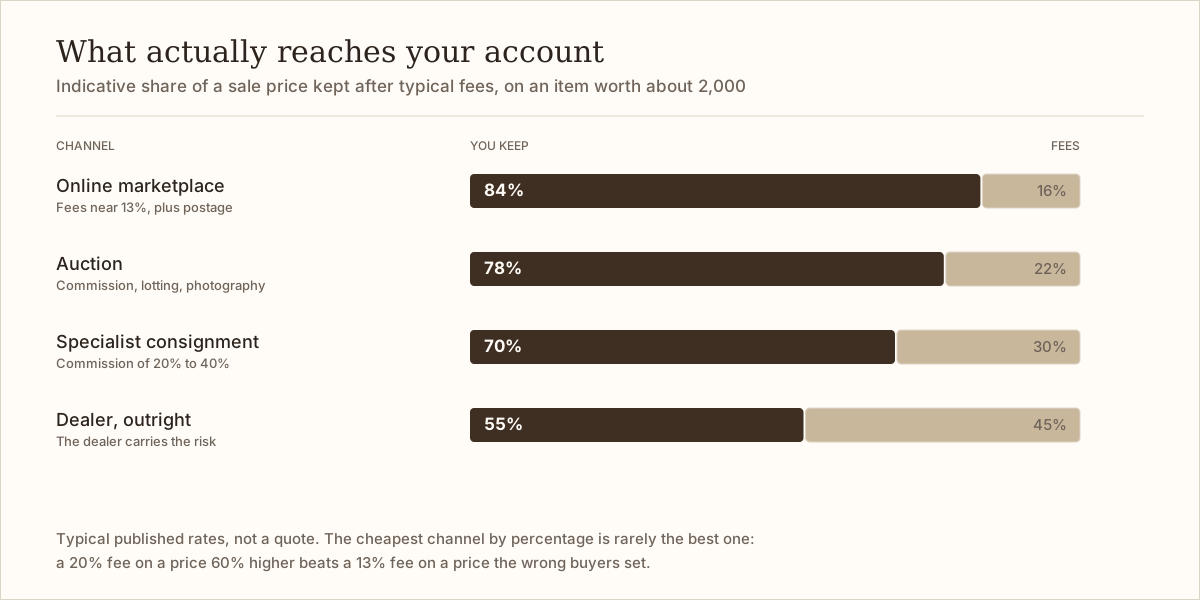
The four channels, compared
Take an item a buyer is willing to pay roughly $2,000 for. The figures below use typical published fee ranges and are illustrative; check current rates for your own account and region before relying on them.
| Channel | Typical deductions | Indicative net | Time to cash |
|---|---|---|---|
| Online marketplace | Final value fee around 13%, plus payment costs, shipping and insurance | $1,650–1,700 | Days, once sold |
| Auction | Seller's commission 10–25%, plus lotting, photography, insurance, unsold fees | $1,450–1,750 on a good day | 1–3 months |
| Specialist consignment | Commission of 20–40% on the sale price | $1,200–1,600 | Weeks to months |
| Dealer, outright | Dealer margin, typically 30–50% below retail | $1,000–1,400 | Immediate |
Two things stand out. The marketplace keeps the most money per sale and costs the most of your own time. The dealer pays the least and costs you nothing but the drive.
Why reach beats rate on specialist items
A marketplace fee of 13% looks decisive against an auction's 20%, and for an ordinary object it is. For an object whose buyers are a small, knowledgeable group, the comparison inverts, because an auction with the right bidder list routinely achieves prices a general marketplace never sees. A 20% fee on a price 60% higher is the better outcome, and it is not close.
The judgment is about who the buyer is. Mass-market items sell to whoever is searching today, which favors the widest, cheapest platform. Specialist items sell to people who already collect that category, which favors whoever can reach them.
The cheapest channel by percentage is rarely the best channel for the item. Reach matters more than rate whenever the buyer is a specialist.
The fees people forget
Shipping and insurance come out of your money, not the buyer's, more often than sellers expect, and on heavy or fragile items they decide whether a sale was worth making. Payment processing is frequently charged separately from the platform fee. Auction houses may charge for lotting, photography, storage and a fee on unsold lots — and those apply whether or not the item sells.
Returns are a cost too. A marketplace sale that comes back after three weeks has cost you shipping both ways and a relisting, and on fragile items it may have cost you the object.
Where to sell, by region
The channel names change across markets even though the arithmetic does not.
United States. eBay remains the widest general marketplace, with specialist online auction houses for collectibles and a dense regional auction network. Sales tax and shipping across states are the practical frictions. Estate sale companies handle whole houses on commission, typically 25–40%.
Europe. Catawiki and national marketplaces sit alongside a deep regional auction house network, and cross-border shipping within the EU is straightforward while shipping outside it is not. VAT treatment differs for private sellers, dealers and the margin scheme, and it materially affects what a dealer can offer you. Auction houses in the item's country of origin usually achieve the strongest prices.
Gulf and Middle East. Gold and precious metal have a transparent weight-based market that gives a reliable and immediate floor, which is why liquidating quickly is easier there than in the West. For collectibles beyond precious metal the buyer pool is thinner, and consigning to a European or American auction house often nets more even after international shipping. Dubai's auction market handles the high end.
Time has a price
A middle-tier item might net 15% more on a marketplace than through consignment. If listing, answering questions, packing and shipping takes two hours, decide what your two hours are worth before congratulating yourself on the margin. Across a whole estate, that arithmetic usually argues for consigning the middle tier and handling only the top few items yourself.
A decision rule that holds up
Sell through the widest cheap channel when the item is common and sturdy. Consign when the buyers are specialists, the item is fragile, or you do not want the work. Take the dealer's offer when speed and certainty are worth more than the margin — which is often the case when a property sale or a relocation is driving the timetable.
Before choosing, get a defensible value range so you can recognize a bad offer when you hear one — and check which of the four numbers people call value you are being quoted. Photograph the item and run a SoldSnap evaluation, or see the plans page for the Pro tier, which includes selling guidance alongside the valuation. If you are working through a whole property, value everything first and choose a channel per item rather than sending the whole lot to one buyer.
Reading an offer
Not every offer deserves the same scrutiny, but a few patterns are worth recognizing before you accept one.
An offer made without seeing the marks is a guess, and guesses are priced defensively — which means low. If a buyer has not asked for the underside, the backstamp or the movement, they are pricing risk rather than the object.
An offer that arrives instantly on a specialist item usually means the buyer already knows where it goes. That is not dishonest, but it does tell you the item has a stronger market than the offer reflects, and it is worth getting a second quote.
Pressure on timing is the clearest signal to slow down. Genuine buyers of good objects are used to waiting a week for a decision; the ones who need an answer today are relying on you not checking.
Finally, compare like with like. A dealer's immediate cash offer and an auction estimate are not the same number: the estimate is a hammer price before the seller's commission comes out, and before the lot might fail to sell at all. Convert everything to what actually lands in your account, then decide.
FAQ
Is a dealer's offer always too low?
It is always below retail, because the dealer carries the cost and the risk of finding the buyer. That is the service you are buying. Compare two or three offers against a realistic net from other channels, not against retail.
Who pays the buyer's premium at auction?
The buyer, on top of the hammer price. It does not come out of your proceeds, but it does reduce what bidders are willing to hammer at, so it affects your result indirectly.
Should I set a reserve?
On anything you are not prepared to lose, yes — at the lowest number you would accept. Be aware that unsold lots often carry a fee, so an unrealistic reserve can cost money and achieve nothing.
Does it pay to ship an item abroad to sell it?
Sometimes. For items with a strong home market — English clocks, French furniture, American folk art — consigning into that market can outweigh shipping and customs costs. Get an estimate from the foreign house before committing.
Last updated 13 September 2026