What Is My Antique Worth? How to Get a Number You Can Act On
The question has four different answers, and the gap between them is wider than most people expect. Which number you need depends entirely on what you plan to do next.
"What is my antique worth" is the most common question in this field and the one most often answered badly — not because the answer is hard to find, but because the question has four different answers and nobody says which one they are giving you.
An insurer, a dealer, a probate solicitor and a buyer will each quote a different figure for the same object on the same afternoon, and all four can be honest. The spread between the highest and lowest is routinely threefold. If you take the wrong one into a decision, you will either refuse a fair offer or agree to a poor one.
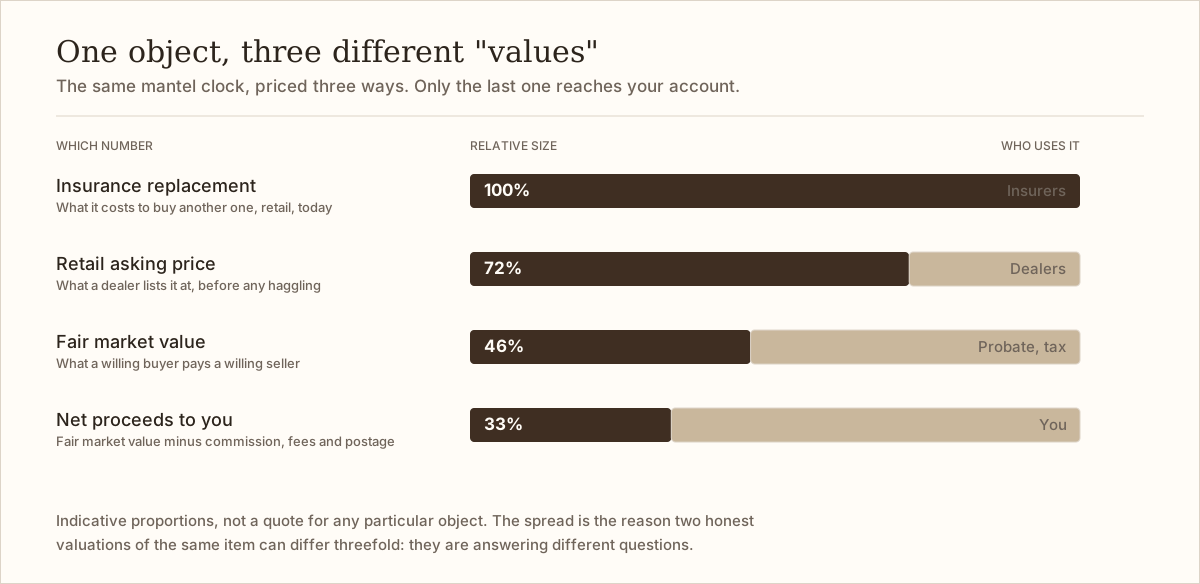
The four numbers, and who each one is for
Insurance replacement value is the highest. It answers: what would it cost to go out and buy another one of these, at retail, today, in a hurry? It is deliberately generous, because that is what a replacement policy has to fund. It is not what anyone will pay you.
Retail asking price is what a dealer puts on the ticket. It includes their margin, their rent, their expertise and the months the piece may sit in the shop. Completed listings elsewhere are usually below it.
Fair market value is the textbook definition: what a willing buyer pays a willing seller, neither under compulsion, both reasonably informed. This is the number probate, tax and estate division work from, and it is the honest midpoint of the four.
Net proceeds is what actually reaches your account: fair market value minus commission, listing fees, payment processing and postage. On some channels that is a modest deduction; on others it is close to half. The channel comparison works through the arithmetic.
When somebody quotes you a value, the useful follow-up is not "are you sure" but "which of the four is that". A dealer offering 40% of a retail price is not lowballing you; they are quoting a different number entirely.
What actually moves the number
Within any one of those four definitions, the range for a given object is set by a short list of factors, and they are not equally weighted.
| Factor | Effect on value | Can a photograph settle it? |
|---|---|---|
| Attribution to a known maker | Largest single factor, often a multiple | Usually, from marks and construction |
| Condition and completeness | Very large, especially on ceramics and watches | Mostly, with the right angles |
| Rarity of the model or pattern | Large, but only where demand exists | Yes, once identified |
| Material and metal content | Sets a hard floor under precious metals | Partly — purity yes, weight no |
| Restoration and replaced parts | Frequently halves the figure | Often, under raking light |
| Provenance and paperwork | Moderate, occasionally decisive | Yes, if you photograph the documents |
| Current fashion in the category | Slow but real, and it cuts both ways | No |
Two points surprise people. The first is that rarity on its own is worth very little: an object nobody else has is only valuable if somebody else wants it, and plenty of genuinely scarce things sell for nothing. The second is that restoration is the most consistently underestimated factor in the list — a repaired ceramic figure or a clock with a replaced movement can lose more than half its value while looking almost perfect across a room.
Where the floor sits
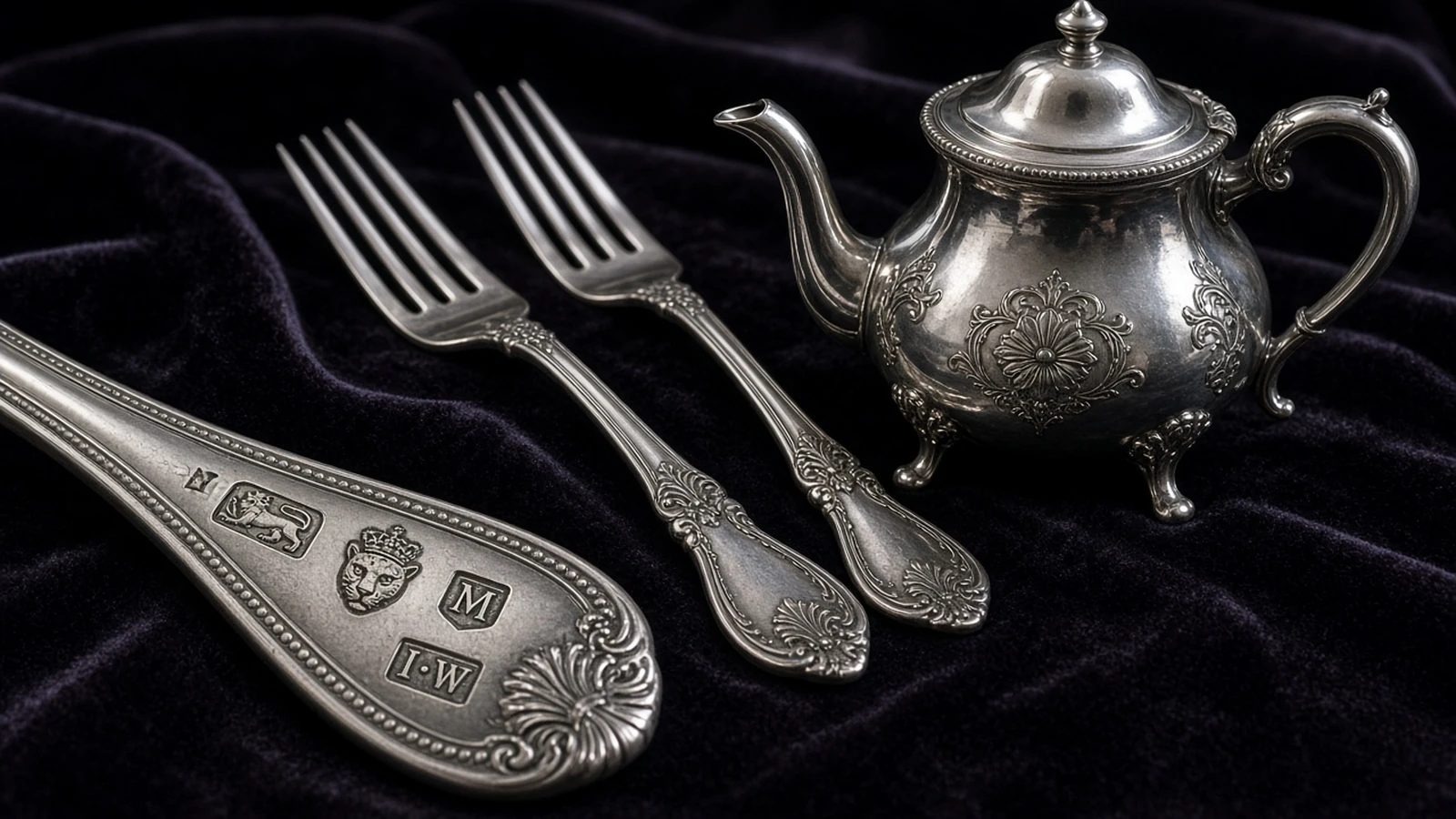
Precious metal, and to a lesser extent gemstones, put a floor under the number. A gold chain that nobody wants as jewellery is still worth its metal content, which is why the first thing to establish on anything gold or silver is fineness — the guide to reading marks covers the stamps that tell you. Below that floor, the object cannot go. Above it, everything depends on whether the piece is wanted for what it is rather than what it is made of.
For everything else — ceramics, furniture, pictures, decorative objects — there is no floor at all. This is the hard part of clearing a house, and it is worth knowing before you start: most objects in most homes are worth less than the cost of selling them properly.
Getting a number today
For a decision you have to make this week, the practical sequence is short.
Establish what it is. Not what it resembles. A name from the piece itself — a mark, a signature, a model number, a movement grade — narrows the search from a category to an object. Photograph every mark you can find, however small.
Find completed sales, not asking prices. An asking price is a wish. A completed sale is evidence. Search the item's specific name plus "sold" and read the results by condition, not by headline figure. Three comparable sales are worth more than thirty listings.
Adjust for your example's condition honestly. Sellers systematically grade their own objects a step higher than a buyer would. Assume the comparables were in better condition than yours unless the photographs prove otherwise.
Decide which of the four numbers you needed. Then check that the figure you have is that one.
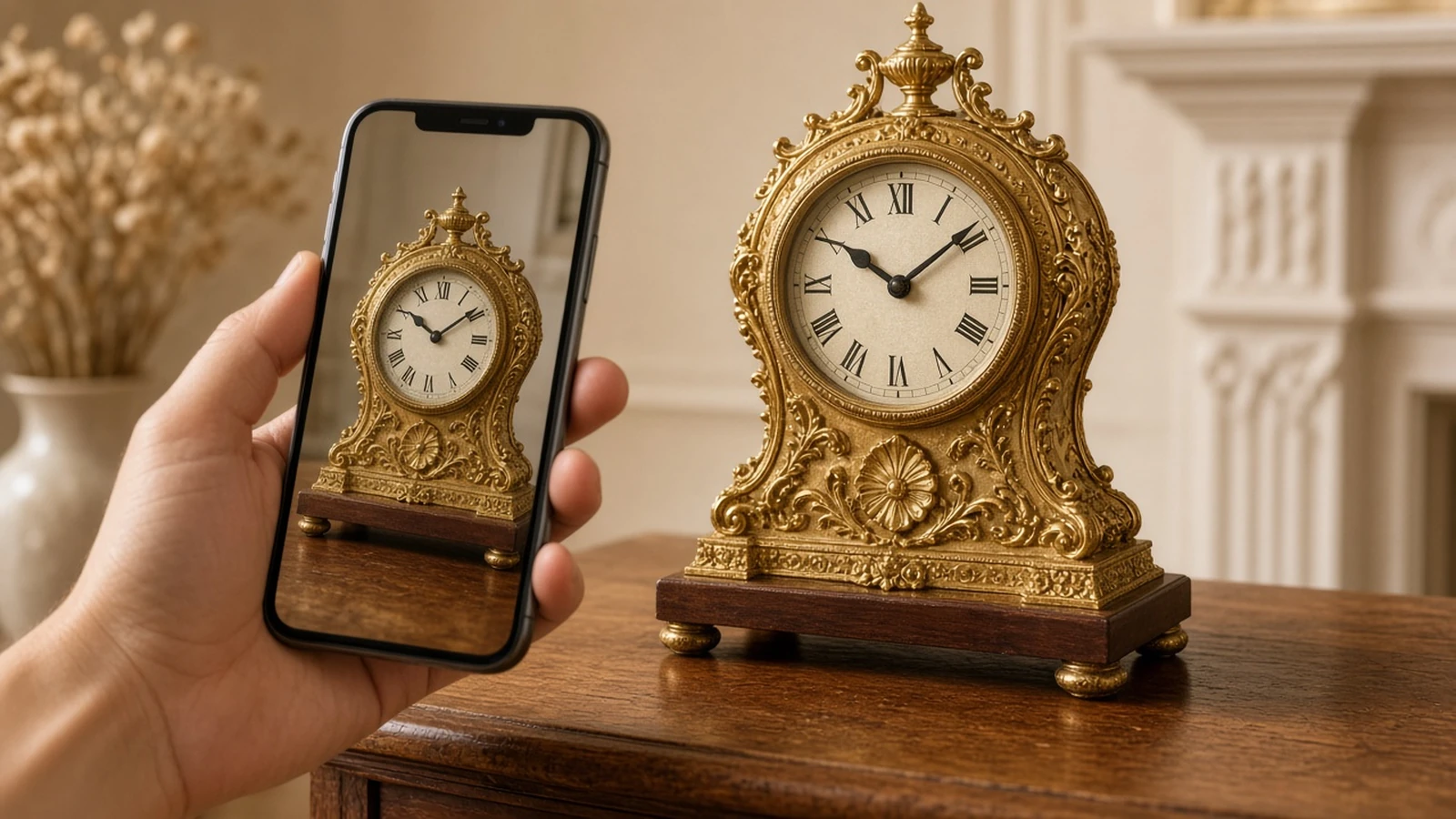
Where this sequence stalls is identification: you cannot find comparables for something you cannot name, and this is where most people give up and put the object back in the cupboard. Photographing it and running a SoldSnap evaluation returns the identification, a condition read and a value range in a few minutes, which is usually the step that unblocks everything else. If the answer raises a question — whether a repair matters, whether the mark is right, whether to sell now — the follow-up chat on the evaluation is there for exactly that.
When the range you get is too wide
A range like "$200 to $2,000" is not an evasion; it is an honest report that one fact is missing. Almost always it is one of three:
The attribution is uncertain. The object is either by the maker it resembles or a contemporary copy of it, and the difference is the whole range. Resolving it needs a closer look at construction, or at a mark you have not photographed yet.
The condition is unclear. Damage and restoration hide from a straight-on photograph. Raking light across the surface, plus close frames of rims, joints and extremities, usually closes the range by itself — what a photograph can and cannot show sets out the four frames that do it.
Something is not visible in an image at all. Weight, the ring of a ceramic, whether a joint is pinned or glued. If the range hangs on one of these, the object needs handling — and at that point a paid appraisal, or a specialist channel that authenticates on intake, is the only thing that will close it.
A wide range is still actionable in one specific way: it tells you the object is worth ten more minutes of your attention, which is more than most of a house earns.
The order to work in
If you are facing more than a handful of objects, do not price them one by one in the order you find them. Sort first, value second: photograph everything, run the batch through an evaluation, and only then spend real time on the items whose ranges justify it — what a photograph reveals about value sets out the frames that make that first pass reliable. If the objects are being divided between people rather than sold, get the numbers before the conversation about who gets what.
FAQ
How much is my antique worth?
It depends which value you need. Insurance replacement is the highest figure, fair market value is what a willing buyer pays, and net proceeds is what reaches your account after fees — commonly a third of the insurance figure for the same object.
Can you value an antique from photographs alone?
For most items, yes. Marks, construction, proportions and visible condition are what set value, and all four photograph well. Weight, the sound of a ceramic and internal construction do not, so items whose value hangs on those need handling.
Why do two valuations of the same item differ so much?
Usually because they are answering different questions — one is a replacement cost and the other is a resale figure. Ask which definition each valuer used before assuming either is wrong.
Is an old item automatically valuable?
No. Age sets no floor at all outside precious metals. Value comes from demand for a specific maker, model or pattern, and most household objects of any age have very little.
What is the fastest way to find out what something is worth?
Photograph the object and every mark on it, then run it through a valuation that returns an identification and a range. Identification is the step that unblocks everything else, because you cannot search for comparable sales of something you cannot name.
Last updated 13 September 2026