What Is My Painting Worth? Identifying the Artist, the Medium and the Market
Most of the value in a picture comes from three questions: is it an original, who made it, and what has that artist’s work sold for recently. The back of the frame often answers more than the front.
"What is my painting worth" has a wider range of answers than almost any other question about inherited objects. A decorative oil from a furniture store and a signed work by a collected regional artist can look similar on a wall and differ in price a hundredfold. The good news is that the evidence is usually all there, on the surface, on the signature and on the back.
SoldSnap reads that evidence from photographs. It identifies the medium, reads the signature and labels, sets out the artist's history and the work's likely period, and gives a value range based on comparable sales. Here is how to check each step yourself.
Step 1: Original or print?
This single question decides more value than any other. Use a magnifying glass or your phone's zoom.
| What you see | What it usually is |
|---|---|
| Raised brushstrokes that catch side light, paint crossing the canvas weave | Original oil or acrylic |
| A regular rosette of coloured dots | Offset lithograph (mass-produced print) |
| Fine random spray of ink droplets, flat surface | Giclée or inkjet print |
| Plate mark pressed into the paper around the image | Etching or engraving, often collectable |
| Pencil signature and a number such as 23/150 in the margin | Limited-edition print signed by the artist |
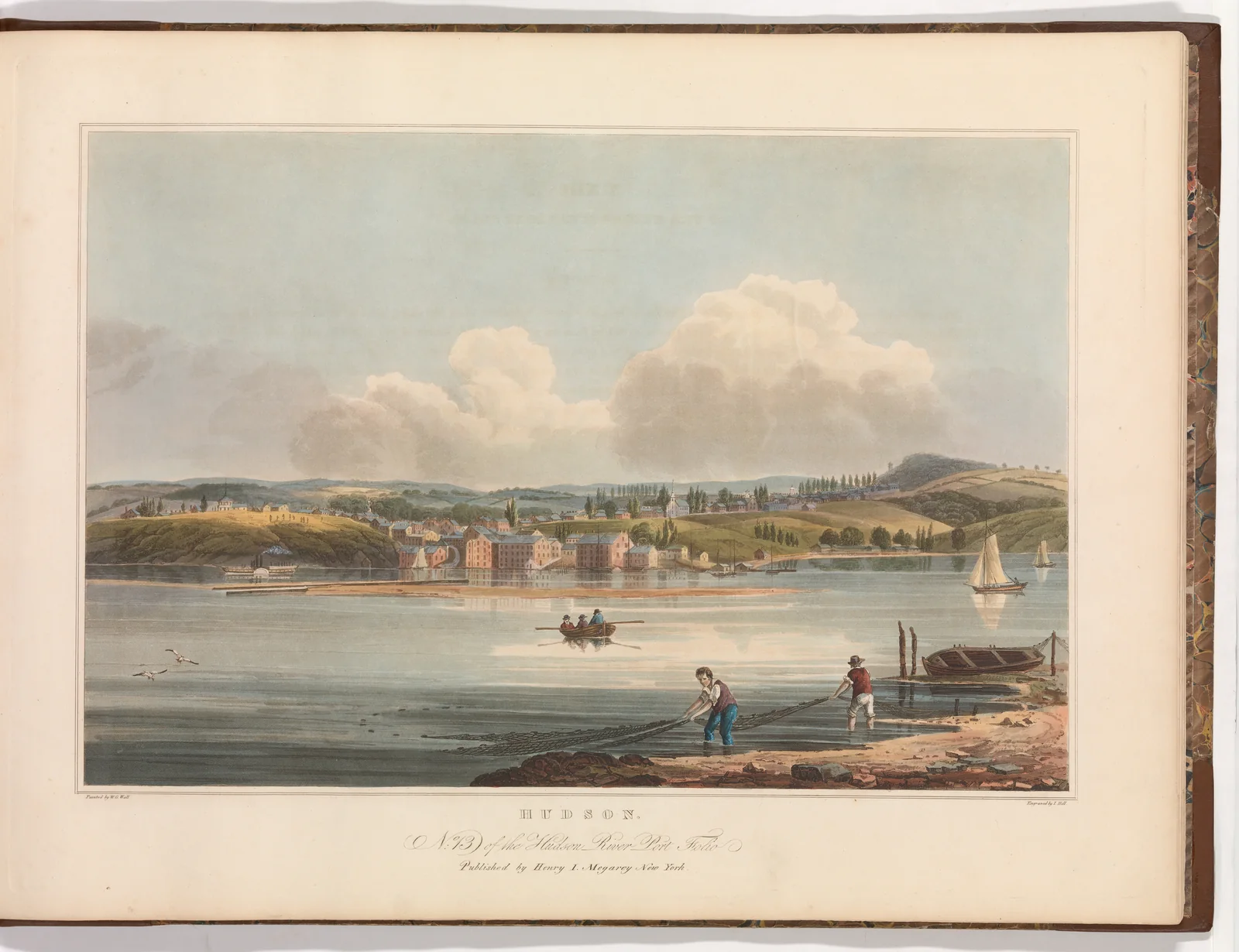
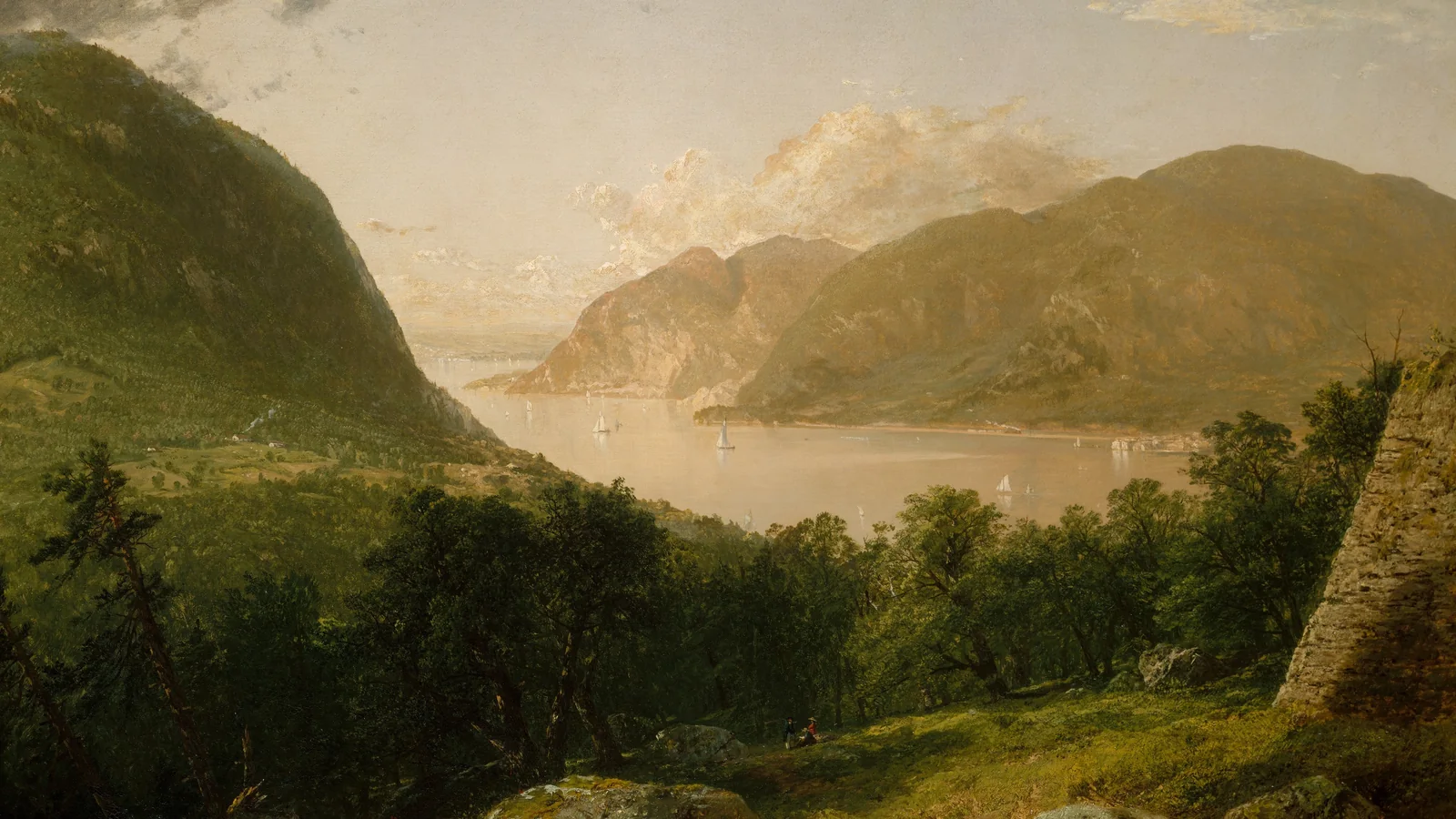
A print of a Hudson River view: John Hill's hand-coloured aquatint Hudson, 1825. Note the printed title and the plate margin, which an oil painting never has. The Metropolitan Museum of Art, Open Access (CC0).
Some prints have brushstrokes added by hand on top ("textured" or "highlighted" prints), so look at the edges where the image meets the canvas. The authenticity guide covers these surface tests in more detail.
Step 2: Read the signature
A signature is a lead, not proof. Write it down exactly as it appears, including any date, and photograph it close up. Search for it in auction databases and artist dictionaries. Check that the signature sits in the paint layer: on an original it was painted with the picture, while one added later can sit on top of varnish or cracks.
Unsigned does not mean worthless. Many good 18th and 19th century pictures were never signed, and attribution then rests on style, materials and provenance.
Step 3: Turn it over
The back of a painting is its history. Photograph it in full before you remove anything.
- Gallery and framer labels name the seller, the city and sometimes the title and date.
- Exhibition labels and stamps show the work was shown publicly, which adds value.
- Canvas and stretcher. Hand-cut wooden keys, tacks instead of staples and darkened canvas suggest age. Staples and bright machine-woven canvas suggest a work from the later 20th century onward.
- Inscriptions in pencil or chalk: titles, owners, lot numbers from earlier sales.
Step 4: Provenance
Provenance is the chain of ownership from the artist to you. Receipts, letters, old insurance schedules, auction catalogues and family photographs showing the picture on a wall all count. A documented history can raise value substantially and is often required by auction houses for significant works. Gather it before you approach anyone.
Step 5: What sets the price
| Factor | Why it matters |
|---|---|
| Artist's auction record | The strongest evidence. Comparable recent sales set the range. |
| Medium | Oils usually outsell watercolours and drawings by the same artist; prints sit lower again. |
| Subject and period | Collectors pay more for an artist's best-known subjects and strongest years. |
| Size | Larger usually sells for more, up to what fits on a wall. |
| Condition | Tears, flaking, heavy overpaint and yellowed varnish reduce price. Cleaning is a job for a conservator. |
| Provenance | Documented history adds confidence and value. |
Do not clean, revarnish or reframe a picture before it is valued. A cheap solvent can remove the top glazes that took the artist days to build up.
How to photograph a painting for valuation
Take the whole front square-on in even daylight without flash, then a close-up of the signature, a raking-light shot from the side to show the surface, the full back, and every label. Measure the image size and the frame size. The photography guide explains which questions images can settle and which need the object in hand.
Where to sell a painting
Works by artists with an auction record usually sell best at auction, ideally at a house that holds sales in that artist's region or school. Decorative pictures without a known artist sell through online marketplaces, consignment shops and local auctions. Galleries buy rarely and at a margin. Compare what you would actually keep on each route in the channel comparison. For probate or insurance, see which value you need first. When you have the photos, a SoldSnap evaluation gives you the identification, the artist's history and a value range.
FAQ
How can I tell if my painting is valuable?
Check that it is an original, identify the artist from the signature and labels, and compare recent auction results for that artist in a similar medium and size.
Can a painting be valued from a photo?
In most cases a reliable range can be given from clear photos of the front, back, signature and labels. High-value works need inspection in person before sale.
What if my painting is not signed?
Unsigned works can still be valuable. Style, materials, labels and provenance can support an attribution.
Are prints worth anything?
Mass-produced posters and offset prints are usually decorative. Signed, numbered limited editions and original etchings by known artists can be worth a lot.
About the author
SoldSnap Editorial Team
The SoldSnap Editorial Team writes the Journal's guides to identifying, valuing and selling antiques, coins, china and art. Each guide draws on the identifications SoldSnap makes from photographs sent in by people clearing estates, downsizing or selling.
Last updated 2 October 2026