How to Read the Marks on Gold, Silver, Pottery and Pictures
Almost every object worth valuing carries a mark that tells you what it is made of, who made it, or whether it is a reproduction. Four kinds of mark, and how to read each one.
Almost every object worth valuing carries a mark somewhere, and almost every owner looks at the wrong one first. The signature on a painting, the number inside a watch case, the name on a clock dial — these are the marks people photograph, and they are consistently the least reliable evidence on the object.
This guide covers the four families of mark you will actually meet, in the order of how much each one can be trusted: metal fineness stamps, assay and maker's marks, ceramic backstamps, and the printed surface patterns that separate an original picture from a reproduction. It is written for the United States, Europe and the Gulf, because the rules differ by market and most guides only cover one.
Gold and silver: start with the fineness mark
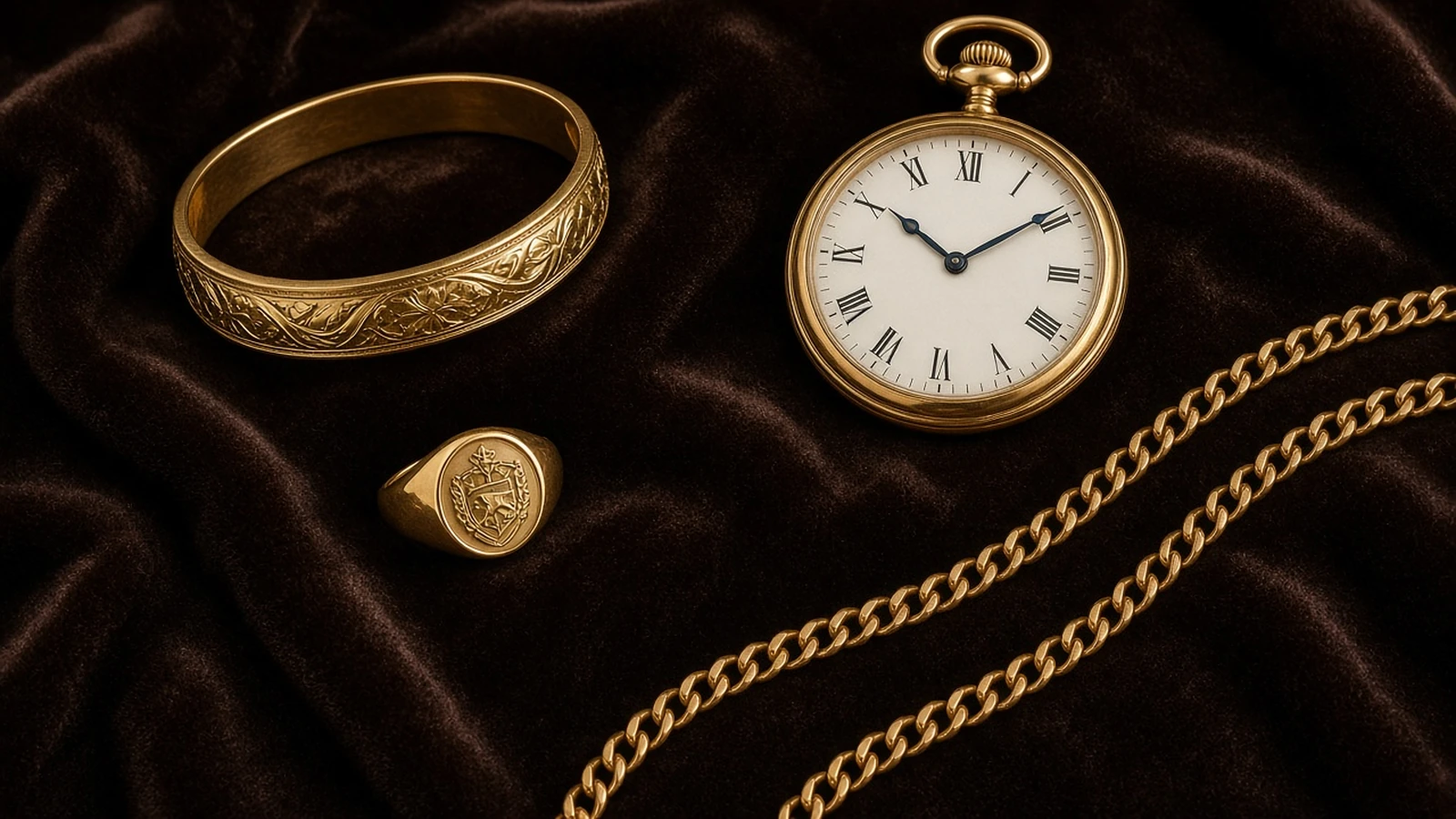
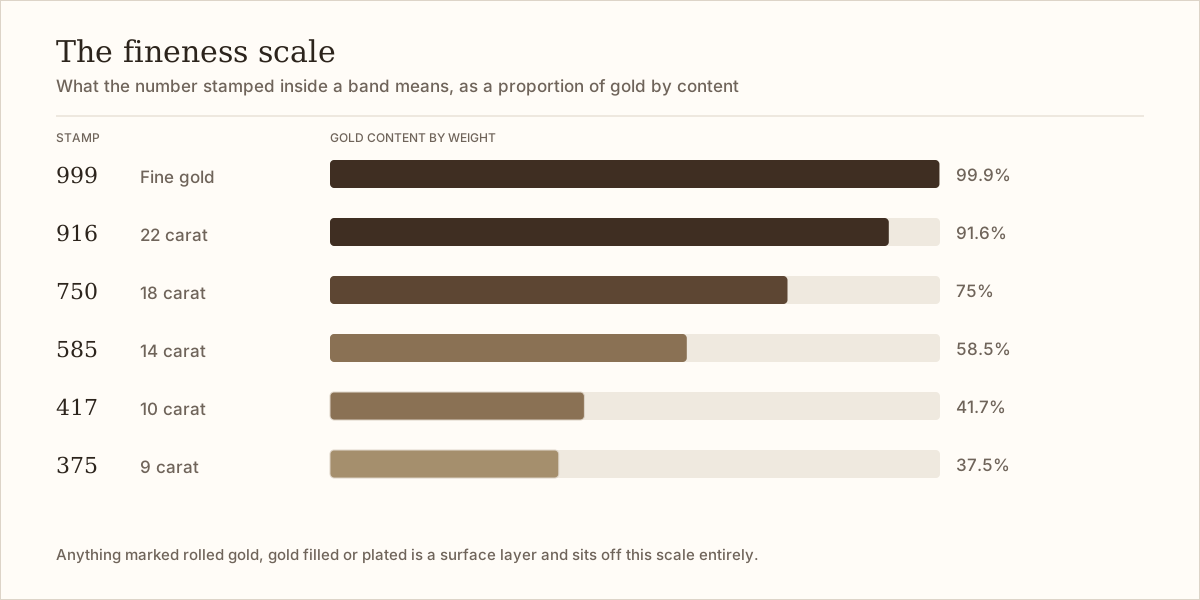
The number stamped inside a ring shank or on a clasp is a declaration of metal content, and it is the one mark that is regulated nearly everywhere. Two systems are in circulation and many pieces carry both.
| Mark | Gold content | Common name | Where you see it |
|---|---|---|---|
| 999 | 99.9% | Fine gold | Bullion, Gulf investment jewelry |
| 916 or 22K | 91.6% | 22 karat | Middle East, South Asia |
| 750 or 18K | 75.0% | 18 karat | Europe, high-end US |
| 585 or 14K | 58.5% | 14 karat | United States, dominant |
| 417 or 10K | 41.7% | 10 karat | United States only |
| 375 or 9K | 37.5% | 9 karat | United Kingdom, Commonwealth |
The regional pattern in that last column is itself a dating and origin clue. A 10K stamp points firmly at an American piece, because 10 karat is the legal minimum there and is barely used elsewhere. A 9K stamp points at Britain or a Commonwealth market. A 22K bangle with no other marking is far more likely to have come from the Gulf or South Asia than from Chicago.
For silver, the equivalent numbers are 925 for sterling and 800 or 835 for the lower continental European standards that confuse a lot of American sellers. A German or Italian piece marked 800 is perfectly genuine silver; it is simply not sterling, and it should not be priced as though it were.
The words that mean "not solid"
More money is lost to this than to any other misreading. Phrases and abbreviations indicating that gold is a bonded surface layer include rolled gold, gold filled, gold plate, electroplate, and any warranty promising a number of years of wear. A case or chain marked this way has a gold skin measured in microns over a base metal core. As metal it is worth almost nothing, regardless of how convincing the color is and how heavy the piece feels.
Silver has the same trap. Plate marks vary by country and era but frequently spell out the process rather than a standard number. If the mark is a sentence rather than a number, be suspicious.
A mark starts the inquiry. It does not finish it. Marked fakes exist, and unmarked genuine pieces exist in quantity. Testing settles it — how to tell if an antique is real covers the evidence that does.
Assay marks: where, when, and who
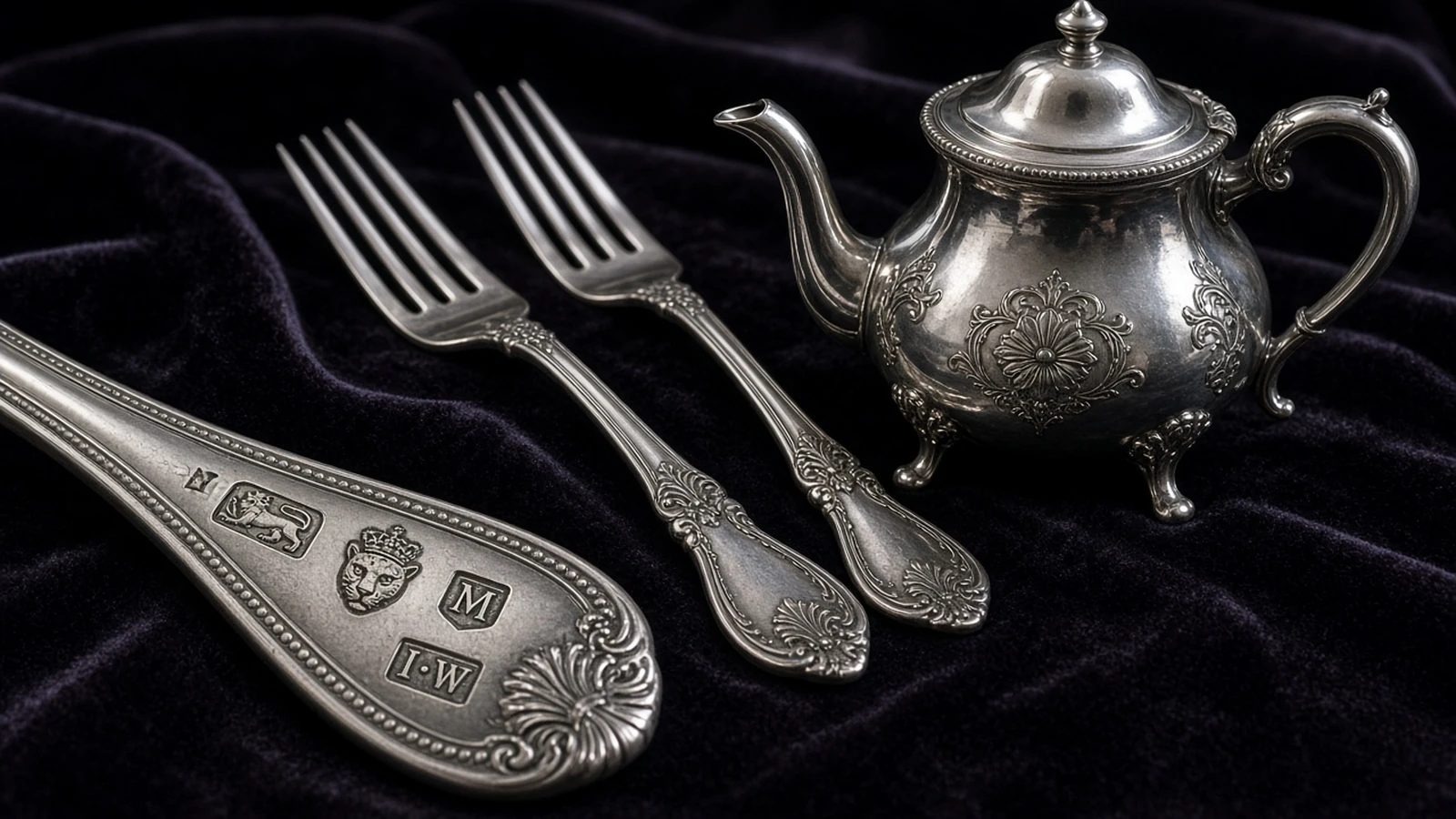
Some markets go further than a content number and require a full hallmark: a sponsor or maker's mark, a standard mark, a town mark identifying the assay office, and historically a date letter giving the year.
British hallmarking is the best documented of these systems and the easiest to recognize on sight. A leopard's head is London. An anchor is Birmingham. A rose is Sheffield in the modern period. A castle is Edinburgh. Where a date letter survives, it resolves the piece to a single assay year — but only when read against the correct office and the correct alphabet cycle, since each office restarts its alphabet in a new typeface roughly every twenty-five years. The shield shape around the letter matters as much as the letter itself.
Continental Europe works differently. Many countries operate under a convention that uses a common control mark alongside the national mark, so a piece may carry marks from two jurisdictions legitimately. France, Germany, Italy and the Netherlands each have their own historical systems layered underneath that.
The Gulf is the market most often misjudged by sellers elsewhere. Gold is bought by weight and purity to a degree that is unusual in the West, standards are actively enforced, and pieces are commonly stamped with the fineness number alone rather than a pictorial assay mark. The absence of a leopard's head on a Dubai-bought bangle says nothing about its authenticity.
The United States, by contrast, has no assay office system at all. American pieces carry a karat stamp and, if the maker chose, a trademark. There is no date letter, which is why dating American jewelry and silver depends far more on style, construction and maker attribution than it does in Britain.
A maker's mark can outweigh the metal
An attributable maker changes the arithmetic completely. Signed work from a recognized house sells at a multiple of its melt value; unsigned work of identical weight sells at melt. Photograph any trademark, symbol or set of initials you find, however small, and treat it as the most commercially important mark on the piece — more so than the fineness stamp that tells you what it is made of.
Ceramics: the backstamp is a date range, not a date
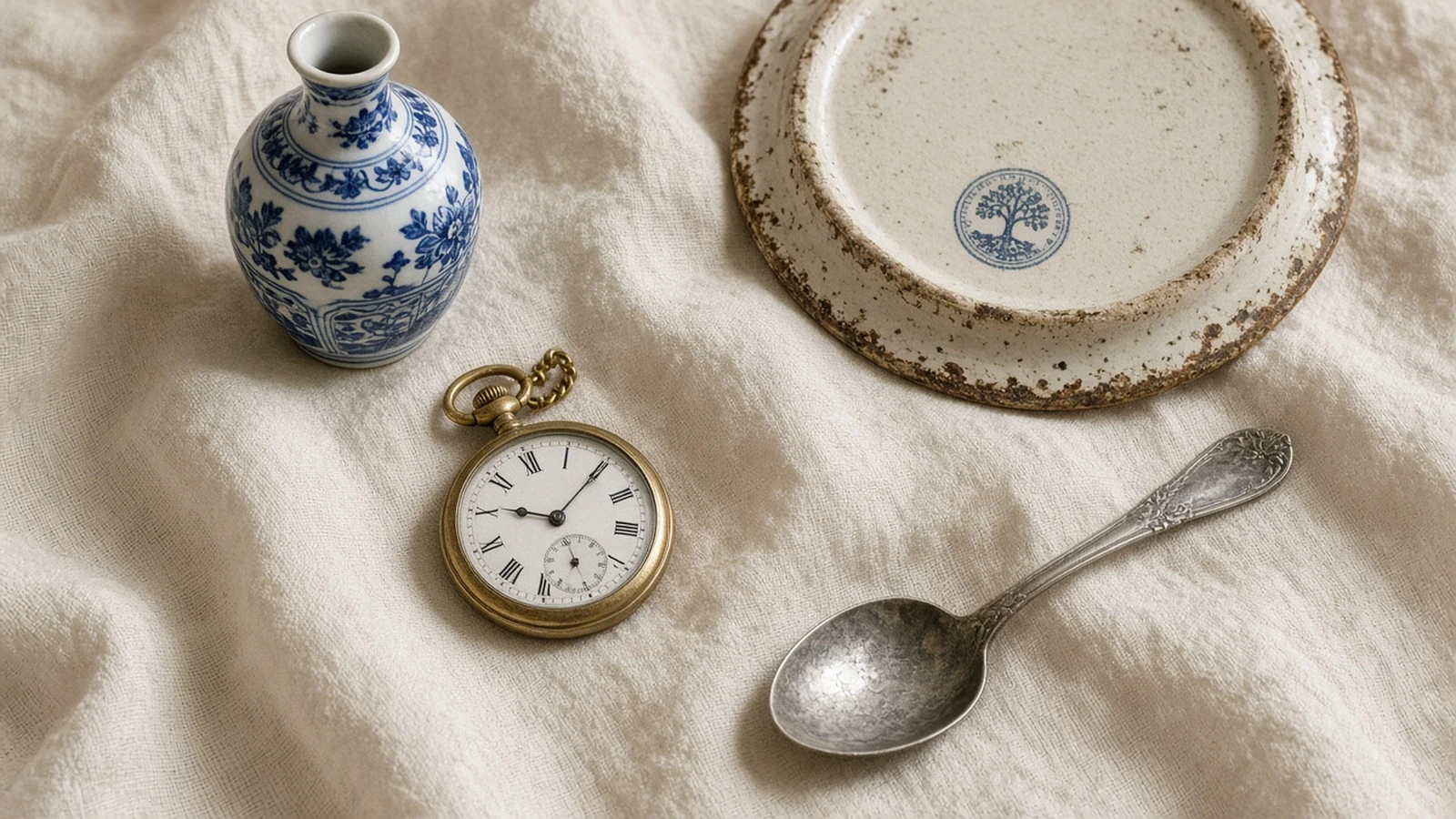
Turn a plate, vase or figure over. The mark on the base is usually printed, impressed or painted, and unlike a hallmark it is a company's trade mark rather than a legal declaration. That makes it enormously useful for dating, because manufacturers changed their marks regularly and collectors have documented the changes in detail.
Three things to read, in order:
The mark itself. Factory marks change shape, add or drop wording, and switch from impressed to printed over a maker's life. A mark that was used for fifteen years places the piece within those fifteen years.
The country wording. This is the single most useful dating shortcut in ceramics. Import regulations at various points required goods to name their country of origin, and later required the words "made in" alongside it. The presence, absence and exact phrasing of that wording brackets the piece into broad periods without any specialist knowledge at all.
Pattern and shape numbers. These are usually painted or impressed separately from the backstamp and identify the decoration and the mold. They rarely date a piece on their own but confirm an attribution.
Damage matters more in ceramics than in most categories, because restoration is common and hard to see. Run a fingertip around rims and extremities, and look at the piece under a strong light held at an angle; restored areas often show a slightly different surface sheen from the original glaze.
Pictures: the mark is the surface itself
A framed picture carries no stamp, so the equivalent evidence is the surface under magnification. This matters because prints signed in pencil, prints on canvas, and prints with brushmarks added by hand are all routinely inherited as paintings.
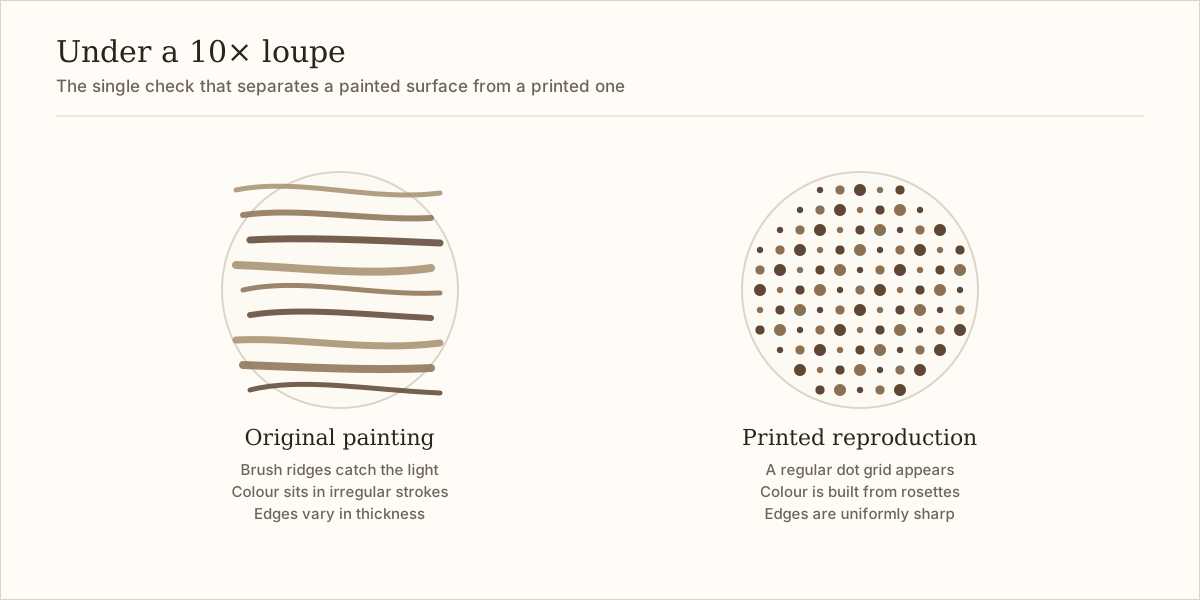
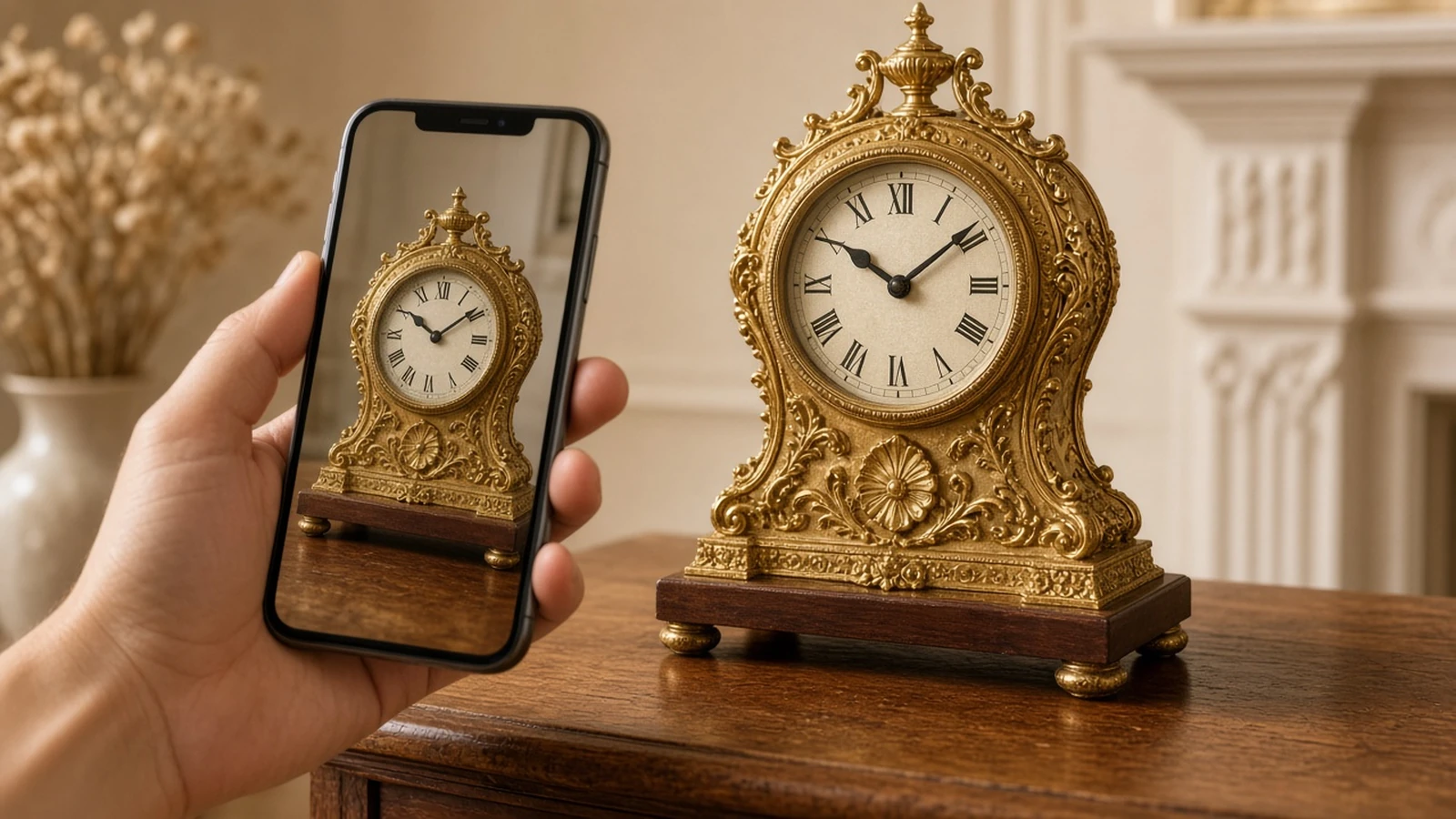
Take a loupe or a phone camera at maximum zoom to a mid-tone area. A photomechanical print resolves into a regular pattern of dots, often rotated into rosettes where colors overlap. A painted surface resolves into strokes with irregular edges and varying thickness. Inkjet reproductions sold as giclée use a finer random spray instead of a rosette grid, so they pass this test where older prints fail it — but they fail the next one.
Light the surface from almost flat and look across it. Paint has physical relief; even thin passages show the ridge where a loaded brush lifted. A print on paper is flat, and a print on canvas shows the canvas weave running straight and continuously through areas where a painter would have laid thick paint. Texture in a few passages only, with flatness elsewhere, is the signature of a hand-embellished print.
Then turn it over, because the reverse carries more evidence than the front: stretcher bars with corner keys, a tacking margin with unpainted canvas, a plate mark pressed into the paper around an intaglio print, gallery and framer labels. Read the signature last. A pencil signature in the margin below the image, particularly with a fraction beside it, is the convention for a signed edition print, not for a painting.
Photographing marks so somebody else can read them
Most remote valuations fail on the photograph rather than the object. Rest the item on a plain mid-tone surface. Light it from the side so the stamps cast shadow into their own depressions — a mark lit flat from the front disappears. Fill the frame with the mark rather than the whole object, and take a second frame slightly rotated, because a single angle often loses one character.
If the mark is worn past reading, raking light is still your best tool: the relief survives in the metal long after the outline has gone.
Once you have the marks, photograph the whole object and run everything through a SoldSnap evaluation for an identification and a value range. If what you actually want is a figure you can act on, what is my antique worth explains which of the four values you are being quoted. If you are working through a whole property rather than one piece, photograph in batches and let the value ranges decide which items earn a closer look. When you are ready to sell, the channel comparison covers what you actually keep after fees.
FAQ
What does 750 mean on a ring?
The metal is 75% gold by content, which is 18 karat. The remaining quarter is alloy, and its composition is what makes gold yellow, white or rose.
My piece has no mark at all. Is it fake?
Not necessarily. Hallmarking requirements vary by country and period, the United States never required assay marks, and plenty of genuine handmade and older work is unmarked. It needs testing rather than assuming.
Does a signature prove a painting is original?
No. A signature is the easiest thing on a picture to add, and printed reproductions reproduce the signature along with everything else. Judge the surface first and treat the signature as confirmation.
Are Gulf gold pieces hallmarked differently?
Often they carry the fineness number without the pictorial assay marks familiar from Britain. That is normal for the market and says nothing about purity, which is actively regulated there.
Last updated 13 September 2026