Ancient Roman Coin Value: How to Identify and Price a Silver Denarius
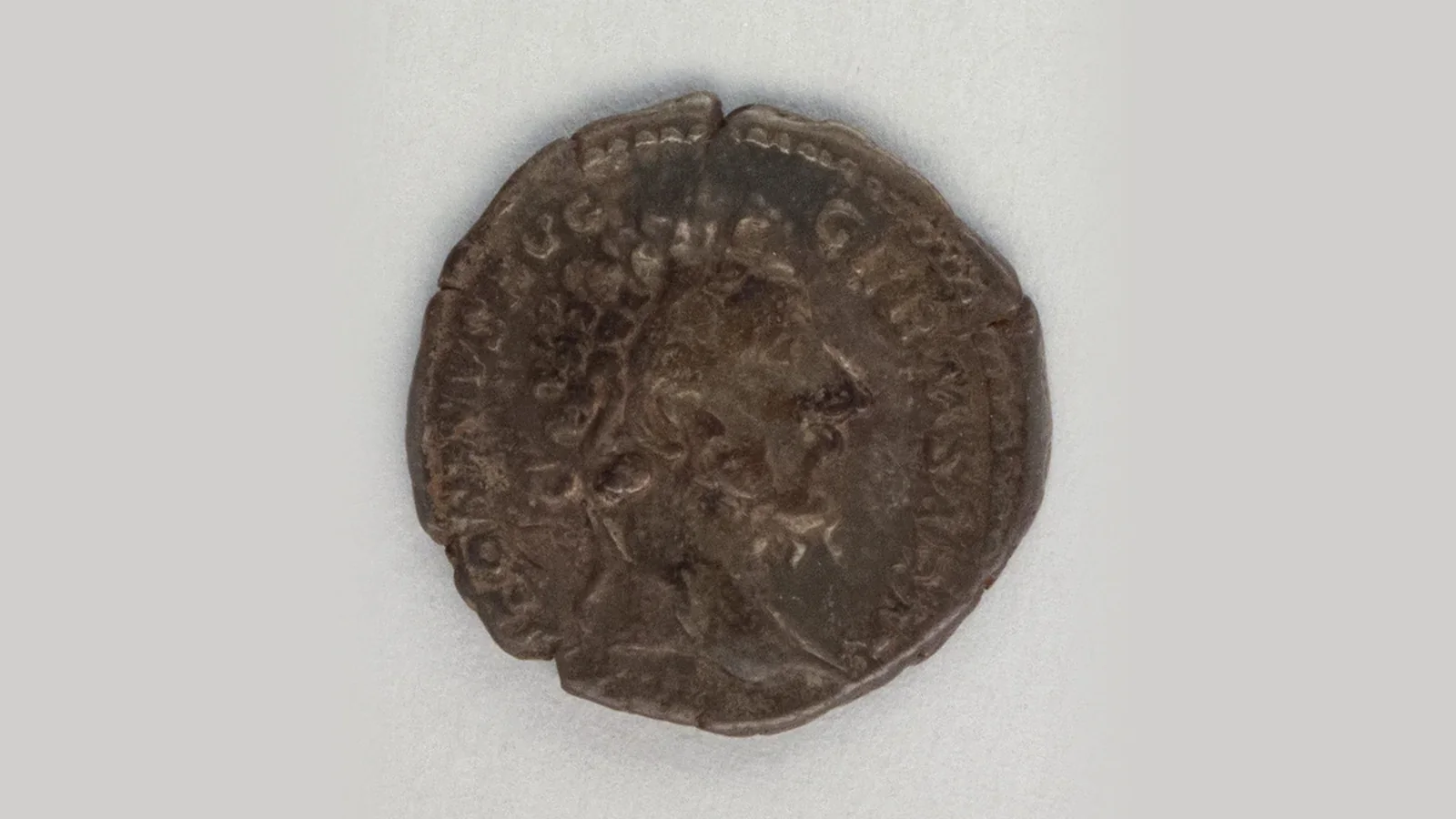
A worn Roman silver coin is more common than most people think and more interesting than its price suggests. The emperor, the reverse design and the surface decide what it is worth.
This week a SoldSnap user photographed a small silver coin with a laureate head on one side and a winged figure holding a wreath on the other, and asked what it was worth. SoldSnap identified it as an ancient Roman silver coin with a Victory reverse, a type struck for centuries to celebrate an emperor's military success.
That is a real answer and a starting point. Ancient Roman coin value depends far more on exactly which emperor, which reverse and what condition than on the silver. Here is how to narrow it down.
A short history of the denarius
Rome introduced the silver denarius around 211 BCE, and it remained the main silver coin of the empire for more than four centuries. Early imperial denarii were close to pure silver. Over the 2nd and 3rd centuries CE the silver content fell steadily. In 215 CE Caracalla introduced a larger coin, now called the antoninianus, and by about 270 CE many "silver" coins were bronze with a thin silver wash. The date of your coin is often visible in how bright and solid its metal still is.
Step 1: Read the legend
The lettering around the portrait names the ruler, usually in abbreviated Latin. A few abbreviations unlock most legends.
| Abbreviation | Meaning |
|---|---|
| IMP | Imperator, commander |
| CAES | Caesar |
| AVG | Augustus, emperor |
| P M | Pontifex Maximus, chief priest |
| TR P | Tribunicia Potestas, with a number that dates the coin to a year |
| COS | Consul, also numbered |
| P P | Pater Patriae, father of the country |
Even three or four legible letters, combined with the style of the portrait, are often enough. The user's coin showed fragments of the legend on both sides, which is typical of a coin that circulated.
Step 2: Identify the reverse
The reverse carries a figure and its own legend. Victory with a wreath and palm, often with VICTORIA AVG, is one of the most common types. Others include Fortuna with a rudder, Concordia, Pax with an olive branch, and military standards. 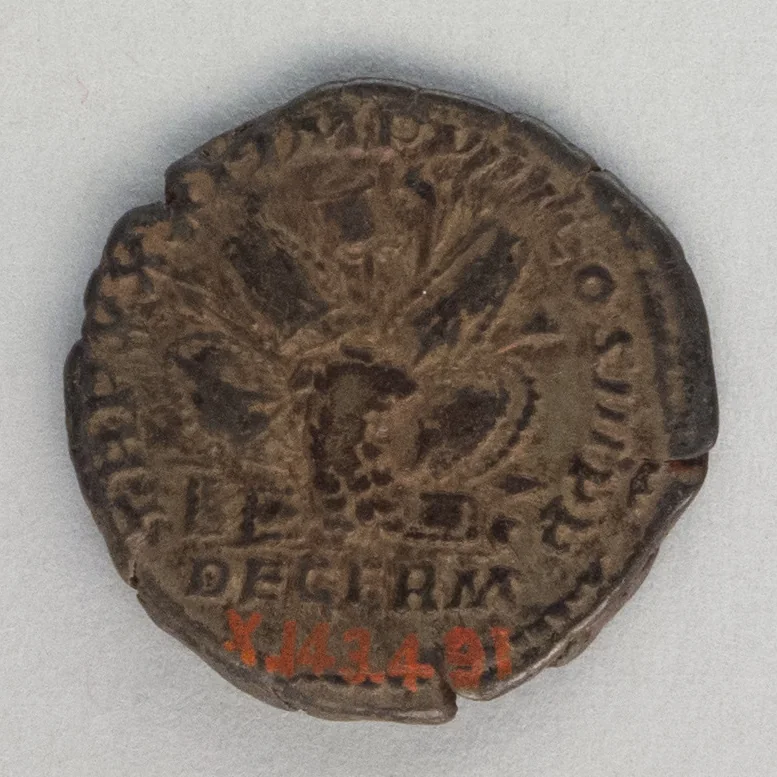
Reverse of a denarius of Marcus Aurelius, 176–177 CE. The Metropolitan Museum of Art, Open Access (CC0).
Victory was not the only way to celebrate a win. A denarius of Marcus Aurelius from 176–177 CE shows a trophy of captured arms with the words DE GERM, "over the Germans", marking his campaigns on the Danube. Coins like these were the news of their day, carried in every soldier's purse.
Collectors catalogue each emperor's reverses in the standard reference, Roman Imperial Coinage (RIC). A rare reverse for a common emperor can be worth several times the usual price.
Emperors you are most likely to find
Some rulers struck far more silver than others, so their coins turn up far more often in inherited collections. Common emperors are a good thing for a seller: they have deep, active markets and well-documented prices.
| Ruler | Reigned | Why they are common |
|---|---|---|
| Vespasian | 69–79 CE | Large silver issues after the civil war of 69 |
| Trajan | 98–117 CE | Long reign, many reverse types celebrating his wars |
| Hadrian | 117–138 CE | Long reign, travel series naming the provinces |
| Antoninus Pius | 138–161 CE | Long, peaceful reign with steady output |
| Marcus Aurelius | 161–180 CE | Long reign and many military reverses |
| Septimius Severus | 193–211 CE | Very large output from several mints |
| Julia Domna | Empress, 193–217 CE | Struck in large numbers for the wife of Severus |
Most empresses and short-lived rulers sell for more, simply because fewer coins were struck.
Step 3: Judge the condition
Ancient coins are graded more by eye than by number. Buyers look at:
- Centring: whether the full portrait and legend are on the coin.
- Portrait: hair, wreath and facial detail. A strong portrait sells.
- Surface: smooth original metal beats pitting, corrosion or porous patches.
- Legibility: a fully readable legend makes attribution certain, which adds value.
Do not clean it. Polishing removes the toning collectors want and leaves visible scratches.
Step 4: Rule out a fake
Roman coins have been copied for centuries, and cast copies are common online. Warning signs:
- A seam or filed line around the edge, where two halves of a mould met.
- Soft, blurry detail with tiny round pits across the surface.
- A weight well off the norm. Denarii of this period usually weigh roughly 3 to 3.6 grams.
- A bright, even "silver" colour on a coin from a period when the metal was debased.
The authenticity guide covers these checks for other materials too.
What Roman silver coins sell for
| Coin | Typical range |
|---|---|
| Worn denarius of a common emperor, legend partly readable | Tens of dollars to low hundreds |
| Well-centred, clear portrait, common emperor | Low to mid hundreds |
| Scarce emperor or empress, or rare reverse | Hundreds to thousands |
| Republican denarii with historical types | Wide range, some very high |
These are broad market ranges, not a valuation. A SoldSnap evaluation narrows them for your specific coin from clear photos of both sides, and what is my antique worth explains which value figure you need.
How to photograph an ancient coin
Place the coin on a plain, matte background. Avoid strong colours such as red or black velvet, which throw off the camera's exposure. Use one light from the side so the relief casts small shadows, and take each side square-on and filling the frame. Add the weight in grams and the diameter in millimetres if you can measure them. The photography guide explains why angled light matters.
Selling an ancient coin legally
Many countries restrict the export of antiquities, and reputable buyers ask where a coin came from. Keep any purchase receipts, old collection tickets or family records. Sell through established ancient-coin dealers or auction houses, which check provenance and reach serious collectors. The channel comparison sets out what you keep after fees.
FAQ
How much is an ancient Roman coin worth?
Worn common silver denarii usually sell for tens of dollars to low hundreds. Well-preserved coins of scarce rulers can sell for thousands.
How do I identify which emperor is on my coin?
Read the letters around the portrait, look up the abbreviations, and compare the portrait style. SoldSnap can identify the ruler and reverse type from photos of both sides.
What does a winged figure on a Roman coin mean?
It is usually Victory, the goddess of military success, often holding a wreath and a palm branch.
How can I tell if a Roman coin is fake?
Check the edge for a casting seam, the surface for tiny pits, and the weight against the norm for the period.
About the author
SoldSnap Editorial Team
The SoldSnap Editorial Team writes the Journal's guides to identifying, valuing and selling antiques, coins, china and art. Each guide draws on the identifications SoldSnap makes from photographs sent in by people clearing estates, downsizing or selling.
Last updated 2 October 2026