How to Identify China Marks: 14 Makers and How to Date Them
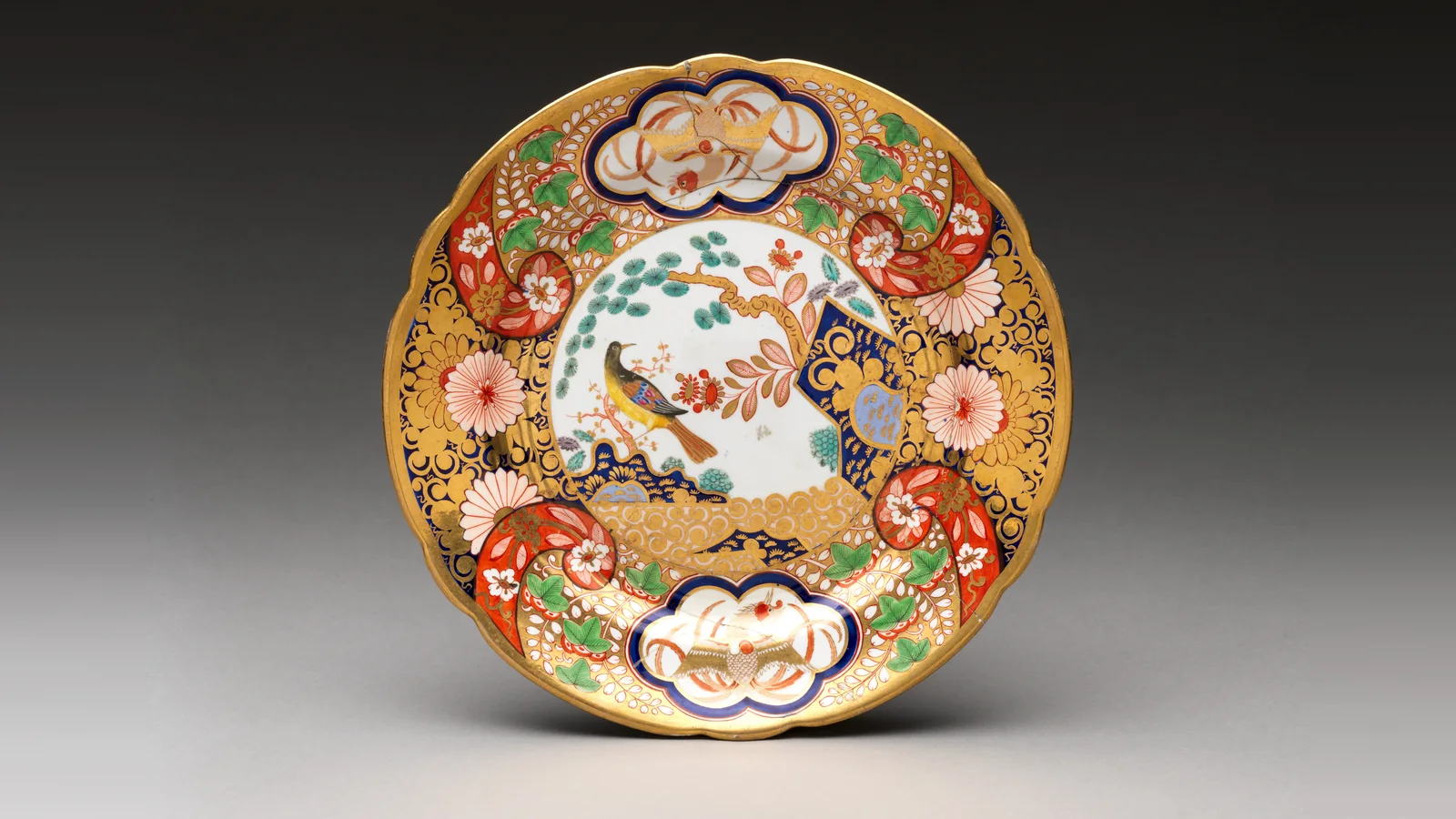
Turn the plate over. The backstamp tells you who made it, roughly when, and often where it will sell. Three real questions show how much one mark can change the answer.
Most china in a family cupboard is worth less than people hope, and a few pieces are worth far more. The difference is almost always written on the bottom. Learning how to identify china marks takes an afternoon, and it saves you from both mistakes: giving away a good piece, or paying an appraiser to look at a dinner service. This guide covers the 14 makers you are most likely to find, then three real pieces SoldSnap identified this week.
Where to find the mark and what to read first
Turn the piece over in good light. Most makers put their mark on the underside: printed in ink, painted by hand, or impressed into the clay before firing. Read three things in this order:
- The maker: a name, a monogram or a symbol such as crossed swords or a crown.
- The country: "England", "Made in Japan", "Limoges France". These words date a piece better than most people expect, because import rules made them compulsory at known dates.
- The pattern: a name or a number. This is what replacement buyers search for.
The china marks you will find most often
This table covers the makers that turn up most in family cupboards and estate sales, with the detail on the mark that helps date a piece.
| Maker | Country | What the mark looks like | Dating clue |
|---|---|---|---|
| Spode / Copeland | England | "Spode" or "Copeland" printed or impressed | The name on the mark changes with the owner (see the Spode section below) |
| Wedgwood | England | "WEDGWOOD" impressed in capitals | "ENGLAND" added from 1891, "Made in England" from about 1908 |
| Royal Doulton | England | Lion standing on a crown over interlocking Ds | The lion-and-crown mark dates from 1902 onward |
| Royal Worcester | England | Crowned circle with four linked Ws | Year letters from 1867, dots from 1892 |
| Royal Crown Derby | England | Crown over a cipher of D and crossed batons | Year symbols under the mark from 1882 |
| Minton | England | Globe with a crown, or "MINTONS" | Small year cyphers impressed from 1842 |
| Mason's | England | "Mason's Patent Ironstone China" with a crown | Ironstone made from about 1813 |
| Meissen | Germany | Crossed swords in underglaze blue | Used since the 1720s and the most copied mark in Europe |
| Royal Copenhagen | Denmark | Three wavy lines, often with a crown | Three lines used since 1775 |
| Herend | Hungary | Coat of arms with "HEREND" | Factory founded in 1826 |
| Haviland Limoges | France | "Haviland & Co Limoges", or "H&Co" | "Limoges France" alone names the region, not the maker |
| Sèvres | France | Interlaced Ls, sometimes with a letter | Date letters from 1753, and heavily faked |
| Noritake | Japan | "Noritake" with an M in a wreath, or "Nippon" | "Nippon" before 1921, "Japan" after |
| Lenox | United States | Wreath with an L | American fine china from the 1900s onward |
Two warnings apply to every maker. A famous mark is the first thing a faker copies, so Meissen, Sèvres and Chinese reign marks need more checks than a plain English backstamp. And "Made in England" or "Japan" tells you the earliest date a piece could be, not the date it was made.
Three real china marks, read by SoldSnap
Here are three questions SoldSnap answered this week, and what the mark told us each time.
1. A blue Spode Tower plate in Dallas–Fort Worth
A user handling an estate sent the front and back of a blue-and-white plate with a wavy, gadrooned rim and asked what it goes for in the DFW area. SoldSnap identified it as Copeland Spode "Tower" transferware.
The Tower pattern was introduced by Spode in 1814. The scene was copied from an engraving of a bridge outside Rome. The pattern stayed in production for well over a century, which matters, because the backstamp is what dates any one plate.
| Backstamp reads | Approximate dates |
|---|---|
| Spode (impressed or printed) | 1770s–1833 |
| Copeland & Garrett | 1833–1847 |
| Copeland, or Copeland Spode, "England" | 1847–1970 |
| Spode, "Made in England" | 1970 onward |
A 20th-century Copeland Spode Tower plate is a well-made, common piece. Single dinner plates usually sell for tens of dollars on the open market. The $130 shop tag on the back of this one is a retail asking price, which is the highest of the four kinds of value. An estate seller in DFW should expect a dealer offer well under that, or a better net result selling a full set together online.
What raises the price: an early Spode or Copeland & Garrett mark, large serving pieces such as platters and tureens, and complete sets without chips or crazing.
2. A Chinese blue-and-white bowl with a Chenghua mark
A user who was downsizing photographed a blue-and-white bowl with a six-character mark in underglaze blue. SoldSnap read it as "Da Ming Chenghua nian zhi": made in the Chenghua reign of the Great Ming.
Chinese reign marks name an emperor's reign, not a date of manufacture. The Chenghua emperor reigned from 1465 to 1487, and genuine porcelain of that reign is among the rarest and most expensive in the world. But Chinese potters often used an earlier, admired reign mark as a tribute. Chenghua marks were applied widely during the Kangxi period (1662–1722) and continued to be used through the 19th and 20th centuries.
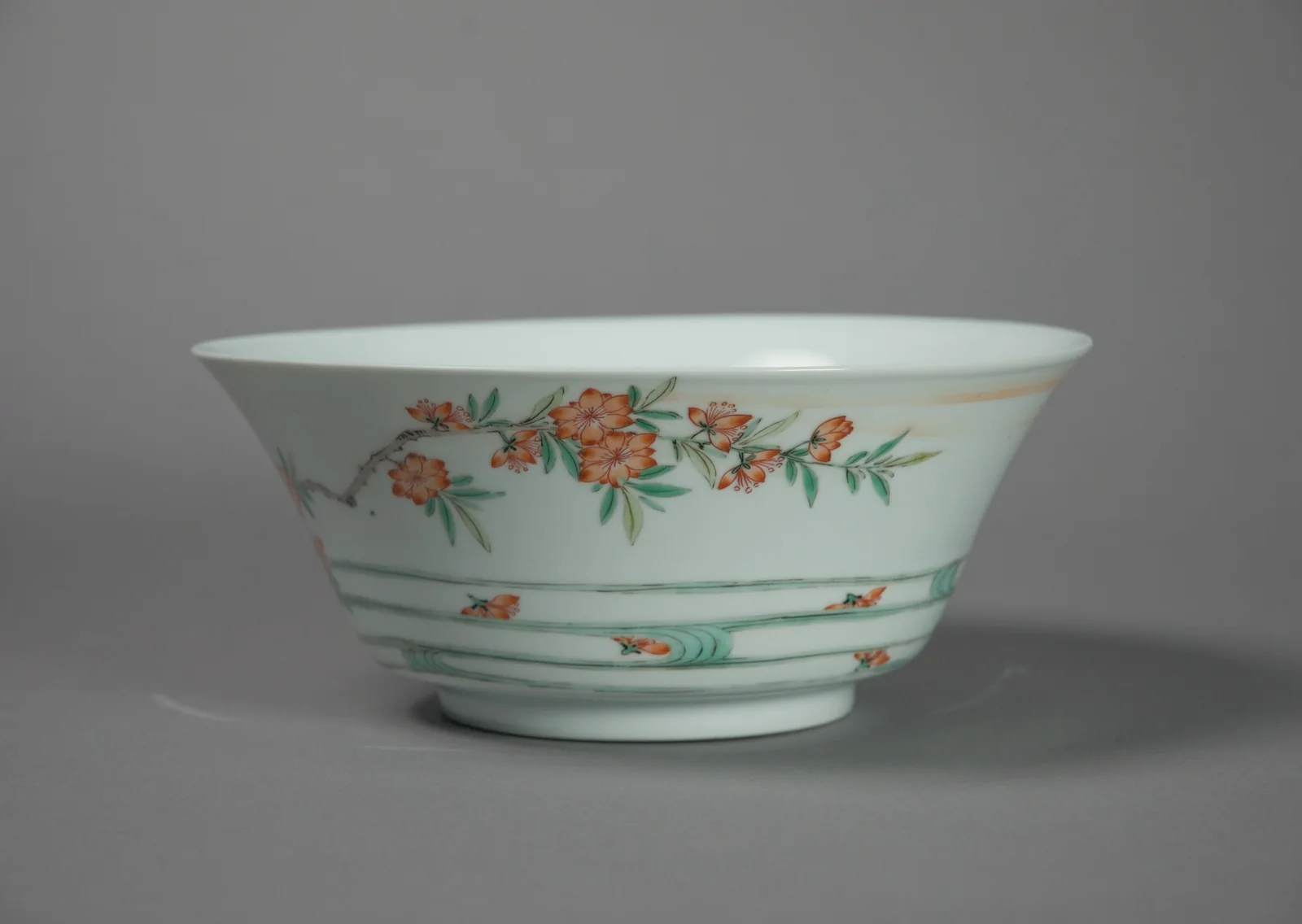
A Chinese porcelain bowl of the late 17th–early 18th century, the period in which earlier reign marks were often reused. The Metropolitan Museum of Art, Open Access (CC0).
So a Chenghua mark almost never means a Chenghua bowl. What decides the value is how good the later piece is. SoldSnap looks at:
- Kiln grit and spur marks on the foot and base, which show how it was fired.
- The calligraphy of the mark, which changes in a recognisable way from period to period.
- The cobalt blue: its tone, and whether it bleeds or "heaps and piles".
- The painting, here a scrolling vine on the outside, and how fluent it is.
A 20th-century copy may sell for tens of dollars. A good Kangxi-period bowl can sell for hundreds or more at a specialist Asian art auction. This is a case where you should get an in-person opinion before selling.
3. A "Made in Japan" gravy boat
A third user sent one photo of a white gravy boat with a pink rose. SoldSnap asked for a picture of the underside, and the backstamp settled it: a Sone China gravy boat with matching underplate, marked "Made in Japan", pattern 751.
Japanese export marks are useful for dating because they follow US import rules.
| Mark | Approximate dates |
|---|---|
| Nippon | 1891–1921 |
| Japan, or Made in Japan | 1921 onward |
| Made in Occupied Japan | 1947–1952 |
Mid-century Japanese dinnerware like this was made in large numbers for department stores. Single pieces usually sell for modest sums, mostly to people replacing a broken piece in the same pattern. That makes the pattern number valuable: put it in the listing title so those buyers can find it.
How to photograph a china mark
Every answer above depended on a clear picture of the base. Wipe off the dust but do not scrub. Shoot straight down in daylight, fill the frame with the mark, then take one wider shot of the whole base showing the foot rim. Glare hides painted marks, so tilt the piece until the reflection moves off the mark. The photography guide explains more, and the full marks guide covers silver and gold as well.
When you have the photos, run them through a SoldSnap evaluation for an identification, the history of the maker and a value range. If the mark looks right but something else feels off, the authenticity guide covers the next checks, and the channel comparison shows what you keep when you sell.
FAQ
What do the marks on the bottom of china mean?
They name the maker, often the country of manufacture, and sometimes the pattern. Symbols, date letters and wording such as "Made in England" help date the piece.
How do I identify the maker of my china?
Read the backstamp on the base: the maker's name or symbol, the country, and any pattern name or number. Search those together, or upload a photo of the base to SoldSnap.
How much is a Spode Tower plate worth?
Most 20th-century Copeland Spode Tower plates sell for tens of dollars each. Early marks, large serving pieces and complete sets sell for more.
Is a bowl with a Chenghua mark from the Ming dynasty?
Almost never. The mark was copied for centuries. The bowl's value depends on when it was actually made and on its quality.
Is "Made in Japan" china valuable?
Most mid-century pieces are worth modest amounts. Early Nippon pieces and complete sets in popular patterns can be worth more.
About the author
SoldSnap Editorial Team
The SoldSnap Editorial Team writes the Journal's guides to identifying, valuing and selling antiques, coins, china and art. Each guide draws on the identifications SoldSnap makes from photographs sent in by people clearing estates, downsizing or selling.
Last updated 2 October 2026